Refugee claim lawyers in Calgary at Centobin Law Office represent individuals seeking protection under Canada's Immigration and Refugee Protection Act (IRPA). A refugee claim is a formal request for protection made by a person inside Canada who faces persecution, torture, or risk to life in their home country. The Immigration and Refugee Board of Canada (IRB) decides each claim through the Refugee Protection Division (RPD). A refugee claim lawyer in Calgary at Centobin Law prepares your Basis of Claim (BOC) form, gathers supporting evidence, and represents you at your RPD hearing to pursue a positive protection decision.
Refugee claims in Calgary require immediate legal action — the Basis of Claim form must be submitted within 15 days of a port of entry claim, and RAD appeals must be filed within 15 days of a negative decision.
Tell us what you need help with, then choose a time that works for you. Your first 15 minutes with Obinna Ononuju are free.
For an urgent matter, call (403) 249-1733.

Canadian refugee law recognizes two categories of protected persons. Understanding which category applies to your situation determines the legal strategy a refugee claim lawyer in Calgary at Centobin Law will pursue at your IRB hearing.
Two categories of people qualify for refugee protection in Canada. A Convention refugee has a well-founded fear of persecution based on race, religion, nationality, political opinion, or membership in a particular social group. A person in need of protection faces danger of torture, risk to life, or cruel and unusual treatment if returned to their home country.
A Convention refugee under Canadian law is a person who has a well-founded fear of persecution in their home country based on one or more of five grounds: race, religion, nationality, political opinion, or membership in a particular social group. To qualify, the claimant must demonstrate that their home country is unwilling or unable to provide basic state protection against this persecution. A refugee claim lawyer at Centobin Law Office in Calgary builds the evidentiary record — including country condition reports, personal testimony, and corroborating documents — needed to establish this standard at the RPD hearing.
A person in need of protection is someone in Canada who faces a personal risk if returned to their home country — a danger of torture as defined under the United Nations Convention Against Torture, a risk to their life not caused by inability to access adequate health or medical care, or a risk of cruel and unusual treatment or punishment not faced generally by others in or from that country. This category protects individuals whose risk may not fit neatly into the five Convention refugee grounds but who nonetheless face serious personal danger.
A refused refugee claim does not always mean removal from Canada. Several legal remedies are available depending on the circumstances of your case. Many refugee claimants in Calgary lose valuable appeal time because they do not realize the 15-day RAD filing deadline begins on the day they receive the written RPD decision — not the day of the hearing.
A refused refugee claim triggers three possible legal remedies. You can appeal to the Refugee Appeal Division (RAD) within 15 days. If ineligible for RAD, you can apply for judicial review at the Federal Court. If removal is ordered, you may apply for a Pre-Removal Risk Assessment (PRRA) based on new evidence of risk.

The Refugee Appeal Division (RAD) of the IRB reviews negative RPD decisions. You must file a Notice of Appeal within 15 days of receiving the written RPD decision. The RAD can confirm the RPD decision, set it aside and substitute its own determination, or refer the claim back to the RPD for a new hearing. You may not appeal to the RAD if your claim was declared to have "no credible basis," you did not attend your RPD hearing, you failed to file your BOC form on time, or your refugee protection status was ceased or vacated.
If you are ineligible for a RAD appeal or if the RAD upholds the negative decision, you may apply for leave and judicial review at the Federal Court of Canada. This is not a new hearing — the Federal Court reviews whether the RPD or RAD made a legal error in reaching its decision. Judicial review requires demonstrating that the decision was unreasonable, procedurally unfair, or involved an error of law.
If all appeal options are exhausted and a removal order is in effect, you may be eligible to apply for a Pre-Removal Risk Assessment. A PRRA evaluates whether you would face persecution, danger of torture, risk to life, or cruel and unusual treatment if removed — based on evidence that arose after your RPD hearing or that was not reasonably available at the time. A positive PRRA decision grants you protected person status in Canada.
The outcome of a refugee claim in Calgary depends on three factors: credibility, the strength of the evidence, and the conditions in the country of origin.
Credibility is the single most important factor. The RPD member assesses whether your testimony is consistent with your Basis of Claim form, whether your account contains internal contradictions, and whether your behaviour before and after the alleged persecution is consistent with someone who genuinely fears return.
Country condition evidence shapes the decision. The RPD relies heavily on the National Documentation Package (NDP) — a compilation of reports, news articles, and expert assessments about conditions in your country of alleged persecution.
Common Reasons Refugee Claims Are Refused in Calgary:
A refugee claim lawyer in Calgary at Centobin Law Office assesses your options immediately after a negative RPD decision — time limits are strict, and delays can eliminate your right to appeal.
Call (403) 249-1733Individuals who do not meet the definition of a Convention refugee or a person in need of protection may still have a pathway to remain in Canada. A humanitarian and compassionate (H&C) application asks the Minister of Immigration to grant permanent residence based on circumstances that would cause unusual, undeserved, or disproportionate hardship if the applicant were required to leave Canada.

| Factor | Refugee Claim | H&C Application |
|---|---|---|
| Decision-maker | Immigration and Refugee Board (RPD) | IRCC officer |
| Legal test | Well-founded fear of persecution or personal danger | Unusual, undeserved, or disproportionate hardship |
| Grounds | Race, religion, nationality, social group, political opinion, torture, risk to life | Establishment in Canada, the best interests of children, health, country conditions, and family separation |
| Timeline | 2–24 months to RPD hearing | 12–36+ months for processing |
| Removal protection | Yes — removal stayed pending decision | No automatic stay — removal can proceed during processing |
| Appeal if refused | RAD appeal → judicial review → PRRA | Judicial review only |
| Can they be filed together? | Yes — an H&C application can run alongside a refugee claim | Yes, but the H&C is decided independently |
An H&C application is not a refugee claim — it is decided by an IRCC officer, not the IRB — but it can be filed alongside or after a refugee claim. H&C factors considered by IRCC officers include establishment in Canada (employment, community ties, language ability), the best interests of any children affected, health conditions, conditions in the country of origin, and the consequences of family separation. A refugee claim lawyer in Calgary at Centobin Law prepares H&C submissions that document each factor with supporting evidence tailored to the IRCC officer's assessment framework.
Certain situations in the refugee claim process require immediate legal intervention — delays of even a few days can permanently affect your case.
You have only 15 days to file a RAD appeal. This deadline is absolute and cannot be extended. Every day without legal representation reduces the time available to prepare your appeal.
For port of entry claims in Calgary, the BOC must be submitted within 15 days. Failure to file results in your claim being declared abandoned.
The Safe Third Country Agreement and Bill C-12 restrictions create complex eligibility questions that require immediate legal analysis before you make a claim.
Under Bill C-12, claims made more than one year after first entry will not be referred to the IRB. If you are approaching this deadline, legal action is urgent.
If CBSA has issued a departure order, exclusion order, or deportation order, a refugee claim lawyer in Calgary at Centobin Law assesses whether a PRRA application, judicial review, or other remedy can halt the removal.
Criminal inadmissibility can make your refugee claim ineligible or result in revocation of protected person status. Early legal intervention is critical.
Contact a refugee claim lawyer in Calgary at Centobin Law Office today for a confidential consultation — RAD appeal and BOC deadlines are absolute.
Book a Free ConsultationThe refugee claim process in Canada follows five stages: making the claim, eligibility determination, completing the Basis of Claim form, attending the RPD hearing, and receiving a decision. A refugee claim lawyer at Centobin Law Office in Calgary guides claimants through each stage, ensuring deadlines are met and evidence is properly prepared.
A port of entry (POE) claim is made when you arrive at a Canadian airport, seaport, or land border. An inland claim is made from within Canada at an IRCC office. In both cases, a CBSA or IRCC officer conducts an eligibility interview to determine whether your claim can be referred to the IRB. Bill C-12 Update (June 2025): Asylum claims made more than one year after a person's first entry into Canada will not be referred to the IRB, and claims from individuals who entered between ports of entry along the Canada–U.S. land border and waited more than 14 days to file will also not be referred.
The CBSA or IRCC officer reviews your identity documents, conducts a security screening, and determines whether your claim meets the eligibility requirements under IRPA. If your claim is eligible, the officer issues a Confirmation of Referral, and your file is sent to the Refugee Protection Division (RPD) of the IRB.
The Basis of Claim form is the most critical document in the refugee claim process — a detailed written narrative explaining why you fear returning to your home country. For POE claims, the BOC must be submitted within 15 days of the claim. Inconsistent BOC narratives are a leading cause of negative RPD decisions in Calgary.
After the BOC is submitted, the RPD schedules a hearing. All RPD hearings are virtual by default unless the case involves urgent or particularly sensitive circumstances. A refugee claim lawyer at Centobin Law in Calgary conducts mock hearings, reviews all submitted evidence, and provides direct representation at the RPD hearing.
The RPD member renders a decision after the hearing: accepted, rejected, abandoned, or withdrawn. A positive decision grants you protected person status in Canada, making you eligible to apply for permanent residence. A negative decision triggers removal proceedings — but appeal options exist, and timing is critical.
For claimants who entered Canada from the United States, an additional legal barrier — the Safe Third Country Agreement — may affect eligibility before the process even begins.
Call (403) 249-1733If you entered Canada from the United States at any point along the land border, the Safe Third Country Agreement (STCA) will likely make your refugee claim ineligible for referral to the IRB. Since March 2023, this agreement applies to the entire Canada–U.S. border — including between official ports of entry — not just at designated border crossings.
Key Rule: If you entered Canada from the United States at any point along the land border, your refugee claim will generally not be eligible for referral to the IRB. Exceptions exist for unaccompanied minors, persons with valid Canadian visas or travel documents, persons with family members in Canada who have certain immigration statuses, and individuals charged with or convicted of offences that could be punishable by death in the U.S. or a third country. Under Bill C-12 (effective June 2025), if you crossed the Canada–U.S. land border between ports of entry and waited more than 14 days before making your claim, the claim will not be referred to the IRB, regardless of any STCA exception.
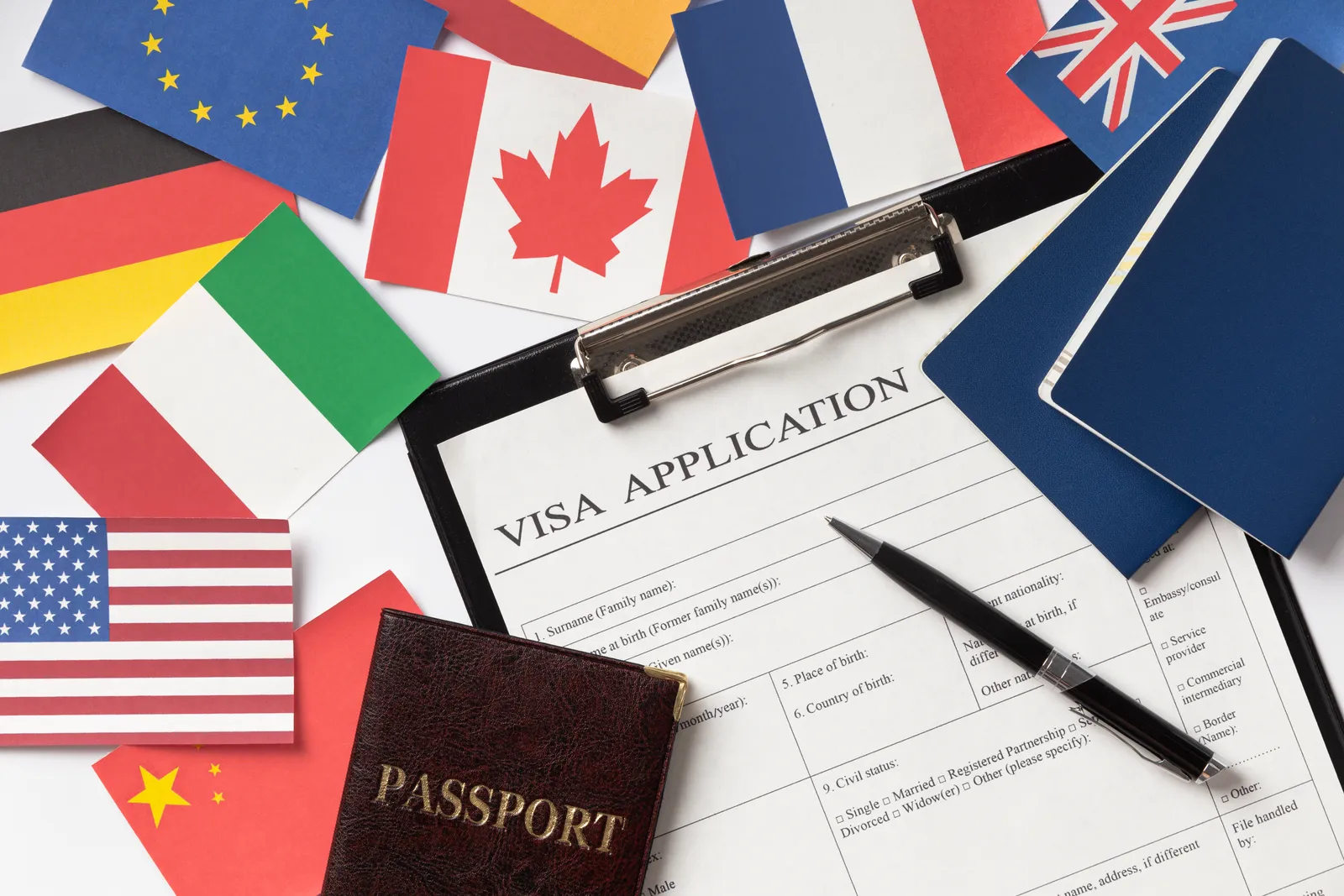
The refugee claim process in Canada involves strict deadlines, complex evidentiary requirements, and high-stakes hearings where a single inconsistency can result in a negative decision. A refugee claim lawyer at Centobin Law Office in Calgary provides representation at every stage of the process.
A refugee claim lawyer in Calgary at Centobin Law evaluates whether your circumstances meet the legal definition of a Convention refugee or a person in need of protection under IRPA, and identifies the strongest grounds for your claim before any documents are filed.
Book a confidential consultationThe BOC form is the foundation of your refugee case. A refugee claim lawyer at Centobin Law in Calgary drafts a legally precise, internally consistent narrative that addresses the RPD member's anticipated concerns regarding credibility, internal flight alternatives, and state protection.
Book a confidential consultationA refugee claim lawyer in Calgary at Centobin Law compiles country condition reports, personal identity documents, medical evidence, police reports, news articles, and expert opinions into a structured disclosure package that supports each element of your claim.
Book a confidential consultationA refugee claim lawyer in Calgary at Centobin Law represents you at your Refugee Protection Division hearing, presents oral submissions, examines and cross-examines witnesses, and responds to the RPD member's questions on your behalf.
Book a confidential consultationIf your claim is refused, a refugee appeal lawyer in Calgary at Centobin Law files RAD appeals, judicial review applications, and PRRA submissions within the strict timelines prescribed by immigration law.
Book a confidential consultationA refugee claim lawyer at Centobin Law Office in Calgary has direct experience representing claimants before the Immigration and Refugee Board's Calgary hearing office. Familiarity with local RPD member decision patterns, regional procedural practices, and Alberta-specific evidence requirements means your hearing preparation is calibrated to the tribunal you will actually appear before.
Book a confidential consultationCriminal inadmissibility is one of the most common reasons refugee claims are found ineligible or protection status is revoked. Centobin Law Office practises both immigration law and criminal defence — our criminal lawyer in Calgary works alongside our immigration team to assess how any criminal history, charges, or convictions may affect your refugee claim.
Book a confidential consultationMany refugee claimants in Alberta qualify for Legal Aid Alberta coverage for RPD hearings and RAD appeals. A refugee claim lawyer in Calgary at Centobin Law Office understands Legal Aid Alberta's eligibility criteria, application process, and coverage limitations.
Book a confidential consultationRefugee claimants in Calgary come from diverse backgrounds — Iran, Syria, Nigeria, Venezuela, Colombia, Turkey, India, Pakistan, and dozens of other countries. A refugee claim lawyer in Calgary at Centobin Law Office provides culturally sensitive representation and works with qualified interpreters.
Book a confidential consultationA refugee claim is a formal request for protection made by a person inside Canada who faces persecution, torture, or risk to life in their home country. The Immigration and Refugee Board of Canada (IRB) decides each claim through the Refugee Protection Division (RPD). Claims can be made at a port of entry or at an IRCC office in Canada.
Two categories of people qualify for refugee protection in Canada. A Convention refugee has a well-founded fear of persecution based on race, religion, nationality, political opinion, or membership in a particular social group. A person in need of protection faces danger of torture, risk to life, or cruel and unusual treatment if returned to their home country.
Refugee claim processing times in Calgary vary depending on case complexity and IRB scheduling. After the BOC is submitted, RPD hearings in Calgary are typically scheduled within 2 to 12 months for standard processing. Expedited processing may be available in urgent cases. RAD appeals are typically decided within several months of filing.
If you fail to submit your Basis of Claim form within the prescribed deadline, the RPD may declare your refugee claim abandoned. An abandoned claim means you lose your right to a hearing and may face removal from Canada. If you are at risk of missing this deadline, contact a refugee claim lawyer in Calgary at Centobin Law Office immediately.
The Immigration and Refugee Board decides a refugee claim in Canada based on whether you face persecution or personal danger in your home country. An IRCC officer decides a humanitarian and compassionate (H&C) application based on hardship factors such as establishment in Canada, family ties, health, and the best interests of children. A refugee claim lawyer in Calgary at Centobin Law Office advises on which pathway — or combination of pathways — is strongest for your circumstances.
Refugee claimants in Alberta can apply for an open work permit while their claim is being processed. Eligibility for a work permit depends on the status of your claim and whether specific conditions are met. A refugee claim lawyer in Calgary at Centobin Law Office advises you on work permit eligibility and assists with the application.
Under the Safe Third Country Agreement (STCA), refugee claims made by individuals who entered Canada from the U.S. at the land border are generally ineligible for referral to the IRB. However, exceptions exist — including for unaccompanied minors, persons with family members in Canada, and individuals with valid Canadian travel documents. A refugee claim lawyer in Calgary at Centobin Law evaluates whether an STCA exception applies to your situation.
The cost of hiring a refugee claim lawyer in Calgary depends on the complexity of your case, the stage of the process, and whether appeals are involved. Centobin Law Office offers transparent pricing and an initial consultation to assess your case. Many refugee claimants in Alberta may also qualify for Legal Aid Alberta coverage.
Refugee claims in Calgary require immediate legal action — the Basis of Claim form must be submitted within 15 days of a port of entry claim, and RAD appeals must be filed within 15 days of a negative decision. Contact a refugee claim lawyer in Calgary at Centobin Law Office today for a confidential consultation.
I started working with Centobin Law in December 2024, my hearing was today 1st may, Obinna professionally submitted all the documents accordingly making it clear and simple for the RPD, to make the decision. The hearing process took 25 minutes; it was successful! Am proud to have Centobin law represent me in my immigration case.
I highly recommend Centobin Law to anyone who needs help with immigration issues.The firm helped me with my refugee case and all was successful.Moreover they provide a payment plan which makes things easier.Lastly I would like to thank Mr Obinna Ononuju for being patient with me and kindly giving me advice throughout the process.
The barrister is smart, honest, kind, caring, and have indepth knowledge of the Canadian law system. There no extra cost apart from his legal fees and he has excellent customer service. I recommend him to everybody who is reading the review.
I'd recommend Centobin Law for all your legal services and advise when it comes to selling your old home and buying a new one. Their legal services were indeed professional, on time in delivering legal services at short notice, while maintaining fair charges. You'll be glad you employed their services!
Obinna is an exceptional lawyer—professional, knowledgeable, and truly dedicated to his clients. He guided me through my case with confidence and made the process so much easier. His attention to detail and commitment are unmatched. Highly recommend!
If it was possible to say in one word? I absolutely would! Probably the best lawyer I have ever dealt with, and if I ever need legal advice again, I would definitely hire them again!! Thank you ever so much for everything you've done for me!! Highly recommended in every way, shape and form!!!
Book a Free 15 Minutes Consultation
Tell us what you are facing and we will tell you where you stand under Alberta law. Your consultation is confidential, carries no obligation, and the first 15 minutes are free.
Monday to Friday, 9:00 AM - 6:00 PM