An LMIA lawyer in Calgary at Centobin Law Office helps Alberta employers obtain positive Labour Market Impact Assessments from Employment and Social Development Canada (ESDC) and assists foreign workers in securing employer-specific work permits. Whether an employer needs to navigate high-wage stream requirements, low-wage position compliance, or Global Talent Stream applications, an experienced immigration lawyer in Calgary at Centobin Law provides end-to-end LMIA guidance — from recruitment advertising through work permit issuance.
Key Fact: As of 2026, the LMIA application fee is $1,000 per position requested. A positive LMIA is valid for 18 months from the date of issuance, and the maximum employment duration under the High-Wage and Global Talent Streams is 3 years.
Tell us what you need help with, then choose a time that works for you. Your first 15 minutes with Obinna Ononuju are free.
For an urgent matter, call (403) 249-1733.

Most Alberta employers need an LMIA when hiring a foreign worker through the Temporary Foreign Worker Program (TFWP). The LMIA is required for any employer-specific work permit that is not covered by an LMIA exemption under the International Mobility Program.
However, several exemption categories allow hiring without an LMIA.
Employers hiring through the TFWP must obtain a positive LMIA in the following situations: hiring for high-wage positions (at or above 120% of Alberta's median hourly wage), hiring for low-wage positions (below that threshold and in a Census Metropolitan Area with unemployment under 6%), agricultural stream positions, and positions requiring the Global Talent Stream for specialized tech or innovation roles.
Not every foreign hire requires an LMIA. The International Mobility Program (IMP) allows employers to hire without one under specific conditions: intra-company transferees moving to a Canadian branch, professionals entering under the Canada-United States-Mexico Agreement (CUSMA), workers whose employment provides significant economic, social, or cultural benefit to Canada (LMIA exemption code C11), and French-speaking foreign workers hired outside Quebec under the Francophone Mobility pathway (C16).
Alberta-Specific Note: Alberta's median hourly wage threshold determines whether a position falls under the high-wage or low-wage LMIA stream. As of 2026, positions paying below 120% of the provincial median wage are classified as low-wage. Calgary employers must verify the current threshold before submitting an application to avoid stream misclassification.
LMIA processing times in Alberta range from 10 business days to over 8 months, depending on the stream.
Alberta typically receives a higher volume of LMIA applications than most provinces due to demand in the oil and gas, construction, healthcare, and hospitality sectors. This higher volume means Alberta processing times frequently run 1–2 weeks longer than ESDC's national averages, particularly for high-wage and low-wage streams during peak hiring seasons.

The Global Talent Stream processes in approximately 10–12 business days.
Primary agriculture positions qualify for the Agricultural Stream, and seasonal exemptions apply.
Low-wage applications average 48 business days (8–10 weeks).
High-wage applications average 60 business days (12 weeks).
The permanent residence stream takes approximately 244 business days, supporting a foreign worker's PR application through employer sponsorship.
LMIA approval depends on three factors: the strength of the employer's recruitment evidence, the accuracy of the application, and whether the position genuinely cannot be filled by a Canadian worker.
Advertising for the full four weeks, using three or more distinct recruitment methods, and keeping detailed records of every applicant screened.
Documenting specific reasons for rejecting Canadian candidates.
The employer must offer wages at or above the Job Bank prevailing rate, not merely at the minimum threshold.
Having a clear business need tied to a specific project or labour shortage.
Submitting all required documents in a single complete package with no gaps.
Generic low-skill positions in industries where Canadian workers are available.
Employers with prior compliance issues or incomplete tax records.
Applications in CMAs where unemployment rates are near the 6% threshold.
First-time LMIA applicants — employers new to the TFWP in Calgary should expect ESDC to review business legitimacy documents more carefully than repeat applicants.
A refused LMIA means ESDC determined the employer did not meet program requirements. The employer loses the $1,000 application fee and the processing time invested. There is no formal appeal process for LMIA refusals — the employer must identify the grounds for refusal, correct the deficiencies, and resubmit a new application.
Insufficient Recruitment Evidence: The employer did not advertise for a minimum of four consecutive weeks, used fewer than the required number of recruitment methods, or failed to document why Canadian applicants were not suitable.
Wage Below the Prevailing Rate: The offered wage does not meet the prevailing wage rate for the occupation and region as listed on Job Bank.
Incomplete or Inaccurate Application: Missing documents, unsigned forms, or incorrect information on the LMIA application form prevent processing from starting.
Business Legitimacy Concerns: ESDC could not verify the employer's business registration, tax compliance, or active operations in Alberta.
Stream Misclassification: The employer applied under the wrong LMIA stream — for example, submitting a low-wage application for a position that should have been classified under the high-wage stream.
CMA Unemployment Rate Restriction: For low-wage positions, ESDC will not process applications in Census Metropolitan Areas with an unemployment rate of 6% or higher. This restriction is updated every quarter.
Had an LMIA Application Refused? Get help from an LMIA lawyer in Calgary — a refusal is correctable with the right resubmission strategy.
Call for a Free ConsultationThe core difference is whether the employer must prove no Canadian worker is available for the job. LMIA-based work permits require this labour market test through ESDC. LMIA-exempt work permits skip the test because the hire falls under an international agreement, provides significant Canadian benefit, or meets another exemption category.

| Factor | LMIA-Based (TFWP) | LMIA-Exempt (IMP) |
|---|---|---|
| Labour market test | Required — employer must prove no Canadian available | Not required — exemption covers the hire |
| Government fee | $1,000 per position (LMIA fee to ESDC) | $230 per position (employer compliance fee to IRCC) |
| Processing body | Employment and Social Development Canada (ESDC) | Immigration, Refugees and Citizenship Canada (IRCC) |
| Recruitment advertising | Mandatory — 4 weeks minimum on Job Bank + 2 additional methods | Not required |
| Typical processing | 10–60+ business days, depending on stream | Varies — often faster than LMIA streams |
| Work permit type | Employer-specific | Employer-specific or open (depends on exemption) |
| Common examples | High-wage hires, low-wage hires, agricultural workers | CUSMA professionals, intra-company transfers, Francophone Mobility |
If your hire does not fall under a specific LMIA exemption category, assume an LMIA is required. Calgary employers who are unsure which pathway applies should get a legal assessment before filing — applying under the wrong program wastes both time and fees.
| Fact | Detail |
|---|---|
| LMIA fee | $1,000 per position |
| Validity | 18 months from issuance |
| Max duration | 3 years (High-Wage & Global Talent) |
| Wage threshold (2026) | 120% of Alberta's median hourly wage |

Hire an LMIA lawyer when the application carries risk an employer cannot absorb: a first-time hire, a position that is hard to classify, a recruitment record that will not survive scrutiny, or a previous refusal. ESDC reviews business legitimacy and recruitment before it reviews the job.
Employers who have never hired a temporary foreign worker face additional scrutiny from ESDC regarding business legitimacy and recruitment processes. A lawyer ensures that the first application meets all requirements.
Resubmitting without addressing the specific grounds for refusal results in a second refusal. A lawyer identifies exactly what went wrong and prepares a strengthened application.
Some occupations fall between LMIA streams or have unusual wage structures. Misclassification is a common trigger for refusal that a lawyer can prevent.
A positive LMIA does not override criminal inadmissibility. Centobin Law handles both the LMIA process and criminal inadmissibility issues — a service most immigration-only firms cannot provide.
Multi-position LMIA applications require coordinated evidence and documentation of recruitment for each role. A lawyer ensures consistency across all applications.
When a critical role needs to be filled quickly, errors or omissions that delay processing can cost the business weeks of productivity. A lawyer reduces the risk of preventable delays.
The cost of legal guidance is a fraction of the cost of a refused LMIA — $1,000 in government fees lost, weeks of processing time wasted, and the business impact of an unfilled position.
Call for a Free ConsultationApplying for an LMIA runs through a fixed sequence: determine the correct stream for the position, complete the required recruitment, assemble the business and wage documentation, file with ESDC, and respond to the officer’s review. Each stage has its own evidence requirements.
Identify whether the position falls under the high-wage, low-wage, agricultural, or Global Talent Stream based on the offered wage relative to Alberta's provincial median. Stream misclassification is one of the most common reasons for LMIA refusal in Calgary.
Employers must advertise the job on Job Bank Canada and use at least two additional recruitment methods for a minimum of four consecutive weeks within three months before submitting the LMIA application. Most LMIA refusals in Calgary stem from weak recruitment records.
ESDC requires proof that the business and job offer are genuine — business registration documents, tax filings, payroll records, and evidence of active operations in Alberta. First-time LMIA applicants in Calgary should expect heightened scrutiny of documentation.
Applications are submitted through the LMIA Online system with all required documents, employer signatures, and the $1,000 processing fee per position. Incomplete applications are not processed, and no fee is charged — but the delay costs valuable time.
ESDC issues either a positive or a negative decision letter. A positive LMIA is provided to the foreign worker, who then uses it to apply for an employer-specific work permit through IRCC. A negative decision means the employer must strengthen recruitment evidence or reassess workforce planning before reapplying.
After receiving the positive LMIA decision letter, the foreign worker submits a work permit application to IRCC. The work permit specifies the employer, job location, role, and duration of authorized employment in Canada.
An LMIA lawyer at Centobin Law Office in Calgary guides Alberta employers through each stage to minimize the risk of refusal.
A positive LMIA does not guarantee that a foreign worker will receive a work permit. IRCC independently assesses the foreign worker's admissibility to Canada, and a criminal record, including convictions from outside Canada, can result in work permit refusal even when the employer holds a valid positive LMIA.
Foreign workers with criminal records may be found inadmissible to Canada under the Immigration and Refugee Protection Act. Convictions for offences including drug charges, fraud charges, impaired driving, and assault-related offences can trigger inadmissibility findings that block work permit issuance entirely.
Centobin Law Office is one of the few Calgary firms that practice both immigration law and criminal defence. An LMIA lawyer and criminal lawyer in Calgary at Centobin Law can assess how a foreign worker's criminal history may affect their work permit application, advise on criminal rehabilitation applications, and coordinate both the LMIA process and any criminal inadmissibility issues simultaneously.

A positive LMIA does more than authorize temporary employment — it can strengthen a foreign worker's pathway to Canadian permanent residence. Many foreign workers in Alberta use the LMIA-supported work permit as a bridge to permanent residency through federal and provincial immigration programs.
A valid job offer supported by a positive LMIA adds 50 points (for NOC TEER 0 major group 00) or 200 points (for other eligible NOC categories) to a candidate's Comprehensive Ranking System (CRS) score under Express Entry.
The Alberta Opportunity Stream under the AAIP requires candidates to hold a positive LMIA or an accepted LMIA-exempt work permit. Foreign workers already employed full-time in Alberta can apply through the AAIP portal for provincial nomination, which adds 600 CRS points.
Foreign workers who accumulate 12 months of skilled work experience in Canada on an LMIA-backed work permit may qualify for the Canadian Experience Class (CEC) — one of the most straightforward federal PR pathways.
An LMIA is often the first step in a multi-year immigration strategy — not just a temporary employment tool. An immigration lawyer in Calgary at Centobin Law Office helps foreign workers and employers plan LMIA applications strategically to align with long-term permanent residence goals in Alberta.
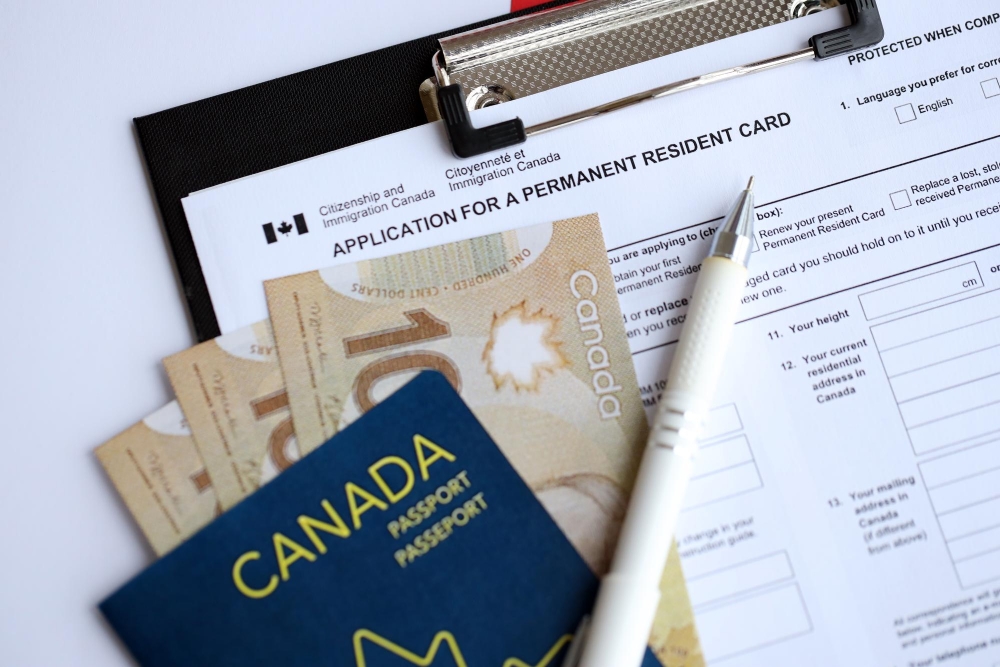
Foreign workers use a positive LMIA to apply for an employer-specific work permit through IRCC.
Work permitsThe Alberta Opportunity Stream under the AAIP requires candidates to hold a positive LMIA or an accepted LMIA-exempt work permit.
Provincial Nominee ProgramForeign workers with criminal records may be found inadmissible to Canada, which can trigger findings that block work permit issuance entirely even with a positive LMIA.
Criminal inadmissibilityCentobin Law determines the correct LMIA stream based on the position's wage relative to Alberta's current median, the occupation's NOC classification, and whether any LMIA exemptions apply — preventing the stream misclassification errors that commonly lead to refusal.
Book a confidential consultationLMIA lawyers at Centobin Law advise employers on Job Bank posting requirements, acceptable supplementary recruitment methods, and how to document interview outcomes to satisfy ESDC's recruitment evidence standards. This is where most Calgary LMIA applications fail.
Book a confidential consultationCentobin Law prepares complete LMIA applications with all required business legitimacy documents, wage evidence, and recruitment records — submitted through the LMIA Online system with no gaps or errors that would delay processing.
Book a confidential consultationWhen an LMIA application has been refused, an LMIA lawyer at Centobin Law reviews the ESDC decision letter, identifies the specific grounds for refusal, and prepares a strengthened resubmission that addresses each deficiency.
Book a confidential consultationAfter a positive LMIA is issued, Centobin Law assists the foreign worker with the employer-specific work permit application through IRCC — ensuring the work permit accurately reflects the LMIA conditions and employment terms.
Book a confidential consultationESDC conducts post-approval compliance inspections. Centobin Law helps Alberta employers maintain compliant employment records, wage documentation, and workplace conditions to avoid penalties or future LMIA ineligibility.
Book a confidential consultationAn LMIA — Labour Market Impact Assessment — is a document issued by Employment and Social Development Canada (ESDC) that confirms hiring a foreign worker will not negatively affect the Canadian labour market. Calgary employers need an LMIA when hiring through the Temporary Foreign Worker Program to prove that no qualified Canadian citizen or permanent resident is available for the position. Without a positive LMIA, the foreign worker cannot obtain an employer-specific work permit to work in Alberta.
The LMIA application fee is $1,000 per position requested, paid by the employer to ESDC. Employers cannot recover this fee from the foreign worker. Additional costs include legal fees for LMIA preparation and submission, recruitment advertising expenses, and any translation or credential verification costs.
The classification depends on whether the offered wage is at or above 120% of Alberta's provincial median hourly wage (high-wage) or below it (low-wage). Each stream has different advertising requirements, cap restrictions, and compliance obligations. Misclassifying a position between streams is a common reason for LMIA refusal in Calgary.
Employers can submit LMIA applications directly to ESDC. However, the application process requires precise documentation of recruitment efforts, wage compliance, and business legitimacy. Errors or omissions result in refusal, and the $1,000 fee and processing time are lost.
LMIA processing times in Alberta vary by stream. As of 2026, the Global Talent Stream averages 10–12 business days, the high-wage stream takes approximately 60 business days (12 weeks), and the low-wage stream takes approximately 48 business days (8–10 weeks).
Yes. ESDC refuses LMIA applications in Alberta when the employer has not demonstrated sufficient recruitment efforts, has offered wages below the prevailing rate, has submitted incomplete documentation, or has applied under the wrong stream. Calgary employers in Census Metropolitan Areas with unemployment rates above 6% cannot have low-wage LMIA applications processed during the affected quarter.
Yes. A positive LMIA supports multiple permanent residence pathways for foreign workers in Alberta. It adds CRS points under Express Entry, satisfies the job offer requirement for the Alberta Advantage Immigration Program (AAIP) and Alberta Opportunity Stream, and enables the accumulation of Canadian work experience required for the Canadian Experience Class.
Provincial Nominee ProgramWhether you are a Calgary employer preparing your first LMIA application, a foreign worker with questions about your work permit eligibility, or an employer who has received a negative LMIA decision, an LMIA lawyer at Centobin Law Office is ready to help.
I started working with Centobin Law in December 2024, my hearing was today 1st may, Obinna professionally submitted all the documents accordingly making it clear and simple for the RPD, to make the decision. The hearing process took 25 minutes; it was successful! Am proud to have Centobin law represent me in my immigration case.
I highly recommend Centobin Law to anyone who needs help with immigration issues.The firm helped me with my refugee case and all was successful.Moreover they provide a payment plan which makes things easier.Lastly I would like to thank Mr Obinna Ononuju for being patient with me and kindly giving me advice throughout the process.
The barrister is smart, honest, kind, caring, and have indepth knowledge of the Canadian law system. There no extra cost apart from his legal fees and he has excellent customer service. I recommend him to everybody who is reading the review.
I'd recommend Centobin Law for all your legal services and advise when it comes to selling your old home and buying a new one. Their legal services were indeed professional, on time in delivering legal services at short notice, while maintaining fair charges. You'll be glad you employed their services!
Obinna is an exceptional lawyer—professional, knowledgeable, and truly dedicated to his clients. He guided me through my case with confidence and made the process so much easier. His attention to detail and commitment are unmatched. Highly recommend!
If it was possible to say in one word? I absolutely would! Probably the best lawyer I have ever dealt with, and if I ever need legal advice again, I would definitely hire them again!! Thank you ever so much for everything you've done for me!! Highly recommended in every way, shape and form!!!
Book a Free 15 Minutes Consultation
Tell us what you are facing and we will tell you where you stand under Alberta law. Your consultation is confidential, carries no obligation, and the first 15 minutes are free.
Monday to Friday, 9:00 AM - 6:00 PM